Local employers
Craft businesses, farms, food processors and mid-sized industry are the backbone of rural employment. When a butcher, baker or inn closes, jobs and a meeting place disappear together.
II · 06 Politics — Rural Development
Most of Germany’s land is rural, and much of its industry, food production and voluntary life is too. Since May 2025 the agriculture ministry has also been the ministry for regional identity.
Policy · July 2026
Government policy
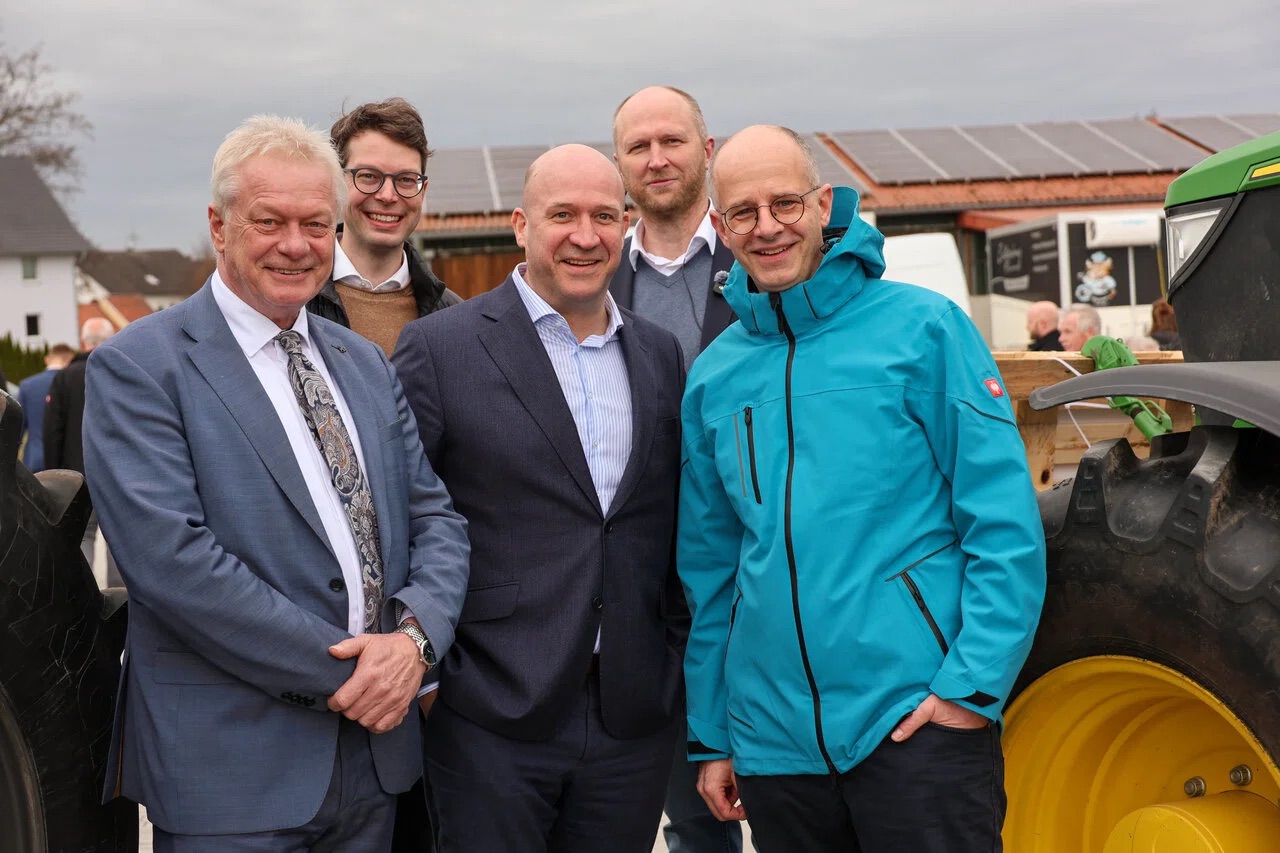
On 16 July 2026 in Chorin, Brandenburg, the ministry presented its Heimat agenda under the title “Miteinander ist es Heimat” (roughly, “Heimat is what we make together”). It includes a series of local Heimat dialogues, a regular national Heimat report and a new federal Heimat prize to recognise local initiatives.
“Heimat” has no exact English equivalent. It combines home, region and belonging. The responsibility moved from the Interior Ministry to the agriculture ministry when the government was formed in May 2025. The decision linked the idea of Heimat with rural areas, rather than only with culture and tradition.
Critics question whether a dialogue programme and a prize can address the material problems of rural regions. Supporters argue that recognising voluntary work and local identity strengthens communities and can counter a feeling of being left behind.
Source: Schwäbische Zeitung / dpa, July 2026.
The pressures
Craft businesses, farms, food processors and mid-sized industry are the backbone of rural employment. When a butcher, baker or inn closes, jobs and a meeting place disappear together.
Distance to the nearest general practitioner, school or supermarket shapes whether families stay or move.
Bus connections, roads and fast internet decide whether working from a village is possible.
Many rural districts are ageing faster than cities, as young people leave for training and university.
Farm numbers keep falling, which changes the landscape, local economies and village life.
Fire brigades, sports clubs, music groups and churches carry much of rural social life on voluntary work.
These are structural trends widely documented in German regional statistics. Figures differ strongly between regions, so they are described here qualitatively.
A case close to home
Rainer’s own constituency combines a mid-sized city, Straubing with about 49,000 inhabitants, and two rural districts: Straubing-Bogen, with 37 municipalities and about 103,000 inhabitants, and Regen in the Bavarian Forest.
Straubing has positioned itself as a centre for renewable raw materials and the bioeconomy, with research and technology institutions linked to the Technical University of Munich. This shows one path for rural regions, connecting agricultural production with research and new industries.
More on the region in Haibach & Bavaria and Straubing Constituency.
Population figures are rounded, based on the latest published official estimates (end of 2025). Exact figures: Bavarian State Office for Statistics.