I · 06 Person — Political Career

Eight eras, one direction

From a party membership card in 1989 to the federal cabinet in 2025, each step in Alois Rainer’s career added a level of government: municipality, district, parliament, committee, ministry.

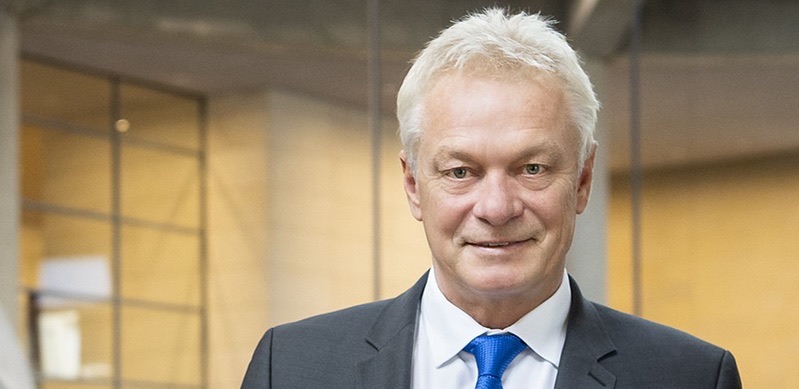
Alois Rainer smiling in a dark suit and blue tie in a bright Bundestag building
Portrait in a Bundestag building, from his years as a member of parliament. Photo: Inga Haar.
01 · Party 1989 – 1996

Entry into the CSU

Political development

Political context

Rainer joined the CSU in 1989, two years after taking over the family business. In Bavaria the CSU has dominated local and state politics for decades, and a political career usually begins in the party’s local and district associations.

Responsibilities

Building a base in Haibach and the district association; from 1999 a seat on the CSU district executive.

Significance

This phase established the local network that later carried him into the town hall and the Bundestag.

02 · Municipality 1996 – 2014

Mayor of Haibach

Municipal leadership

Political context

In 1996 he was elected mayor of Haibach. Over three terms he combined the office with running the family business.

Responsibilities

Municipal administration, budget, infrastructure, planning and community life.

Significance

Executive experience at the level of government closest to citizens. See Local Leadership.

03 · District 2002 onward

District councillor

Straubing-Bogen

Political context

In 2002 he was elected to the Straubing-Bogen district council, where he still sits. The district runs services across 37 municipalities.

Responsibilities

District roads, schools, hospitals, waste management and public transport.

Significance

A wider view of rural infrastructure and a continuous local mandate alongside federal office.

04 · Parliament 2013 onward

Member of the Bundestag

Constituency Straubing

Political context

In 2013 he won the Straubing constituency with 61.2 % of first votes and entered the Bundestag. In his first term he was a full member of the Budget Committee, the Committee on Food and Agriculture and the Audit Committee.

Responsibilities

Federal budget, agriculture, audit of federal spending, constituency representation.

Significance

His first term combined money and farming, the two strands of his later career. See Bundestag.

05 · Spokesperson 2018 – 2019

Budget & finance spokesperson

CSU group in the Bundestag

Political context

From 2018 until October 2019 he spoke for the CSU Landesgruppe on budget and finance policy during the fourth Merkel government.

Responsibilities

Federal budget negotiations, tax policy and Bavarian interests in federal finances.

Significance

A leading role within the CSU group on fiscal questions. See Finance & Budget.

06 · Spokesperson 2019 – 2021

Transport policy spokesperson

CDU/CSU parliamentary group

Political context

From 2019 to December 2021 he was transport spokesperson for the whole CDU/CSU group and a full member of the Transport Committee.

Responsibilities

Roads, rail, logistics and mobility in rural regions.

Significance

The step from the Bavarian group to the joint CDU/CSU group. See Transport Policy.

07 · Committee 2021 – 2025

Chair of the Finance Committee

20th Bundestag

Political context

After the 2021 election the CDU/CSU was in opposition. On 15 December 2021 he was elected chair of the Finance Committee, a 45-member committee responsible for tax, customs and financial-market legislation.

Responsibilities

Chairing committee proceedings, hearings and the scrutiny of federal tax law.

Significance

One of the senior parliamentary posts held by the opposition, and a national profile in fiscal policy.

08 · Government 2025 onward

Federal Minister

Agriculture, Food and Regional Identity

Political context

On 6 May 2025 he was appointed Federal Minister in the cabinet of Chancellor Friedrich Merz. The ministry was renamed and given responsibility for “Heimat”.

Responsibilities

Agriculture, food, forestry, animal welfare, rural areas, regional identity and EU agricultural policy.

Significance

His first executive office at federal level. See Agriculture Policy and Major Initiatives.

Sources: Bundestag biographies of the 18th, 19th and 21st legislative periods; Federal Government CV; Federal Returning Officer (election results). See Timeline for the full chronology.

Analysis

The pattern

Three features stand out. First, the career was built from the bottom up, with long periods at each level: eighteen years as mayor and twelve years as a backbencher, spokesperson and committee chair before ministerial office.

Second, his policy focus shifted over time, from agriculture and budget (2013–2017) to transport (2017–2021) and finance (2021–2025), before returning to agriculture as minister. This breadth is relevant to the fiscal questions his ministry faces, such as the agricultural diesel refund and the farm budget.

Third, his appointment followed the withdrawal of the CSU’s first choice, Günther Felßner, in March 2025. Unlike Felßner, Rainer did not come from the leadership of a farmers’ association. He came from the food trade and from parliamentary finance policy.