II · 09 Politics — European Agriculture

Made in Brussels, felt in Haibach

Much of the framework for German farming is decided at EU level: payments, environmental conditions, trade agreements, food labels and plant-protection approvals. A German agriculture minister works as much in the Council in Brussels as in Berlin.

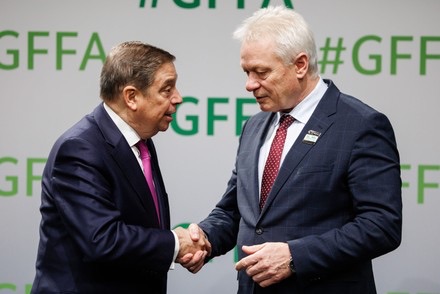
Alois Rainer shaking hands with another minister in front of a backdrop with the hashtag GFFA
Greeting a fellow agriculture minister at the Global Forum for Food and Agriculture, Berlin.
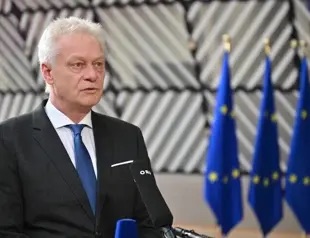
Alois Rainer speaking to the press in front of European Union flags
Speaking to journalists in front of EU flags at a European meeting.

Why national isn’t enough

Four levels of decision

  1. The EU budget and the CAP

    The Common Agricultural Policy finances direct payments to farmers and rural development programmes. German farms receive billions of euros from it every year. That is more than the national agriculture budget spends on farm support.

  2. The single market

    Food standards, hygiene rules, labelling, animal transport and plant-protection approvals are largely harmonised in the EU.

  3. Trade policy

    Trade agreements such as EU–Mercosur are negotiated by the European Commission and approved by the member states and the European Parliament.

  4. National implementation

    Germany implements EU law through federal and state rules. The 16 federal states carry out much of the administration, including paying out CAP funds.

Positions in the Council

Four European files, 2025–2026

01

CAP after 2027

The proposal

In July 2025 the European Commission proposed a new long-term EU budget that would fold agricultural funding into national and regional partnership plans. It includes a ring-fenced minimum for farm income support, a reduction of payments to larger farms, and a cap.

Rainer’s position

He has said he is “not categorically” against capping, but he rejected a limit of €100,000 per farm at the 2026 German Farmers’ Day as unsuited to farm structures in Germany, especially in the east.

Supporters of capping

Argue that public money should not flow disproportionately to the largest holdings and land investors.

Opponents

Point out that large farms in eastern Germany, often cooperatives, employ many people and would lose heavily.

02

EU–Mercosur trade agreement

The decision

EU member states approved the agreement with Argentina, Brazil, Paraguay and Uruguay in January 2026.

Rainer’s position

He welcomed the safeguard clauses and said the EU must tighten them (“nachschärfen”) if imports of sensitive products such as sugar or beef rise sharply.

Business and industry

Welcomed new export markets for German industry and food producers.

Farmers

Many farmers’ organisations remained opposed, fearing imports produced under lower environmental and animal-welfare standards.

Source: top agrar, January 2026.

03

Names for plant-based food

The issue

The European Parliament had backed a ban on meat-style names such as “veggie burger” for plant-based products.

The outcome

A compromise in March 2026 kept terms such as “veggie burger” and “veggie sausage” but restricted others, such as “Rippchen” (ribs) or “Hühnchen” (chicken).

Rainer’s position

He opposed a broad ban and welcomed the compromise: “It is good that the veggie-schnitzel ban is off the table.”

Source: ZDFheute, March 2026.

04

The wolf

European change

The protection status of the wolf was lowered at European level, which allowed member states more room to manage wolf populations.

National follow-up

Germany brought the wolf under federal hunting law. The Bundestag passed the bill on 5 March 2026, and it came into force in April 2026.

Supporters

Livestock farmers, especially those keeping sheep and goats on pasture, say losses had become unbearable.

Critics

Nature conservation groups and the Greens and Left voted against or objected, arguing that herd protection is more effective than hunting.

Source: Bundestag, week 10/2026.

Beyond Europe

Berlin as a meeting place

Each January the ministry hosts the Global Forum for Food and Agriculture during International Green Week, which marked its 100th edition in 2026. The 18th Berlin Agriculture Ministers’ Conference on 17 January 2026 brought together around sixty countries under the motto “Water. Harvests. Our Future.” The ministry gave a figure of 61 states; the Federal Government site gives 59.

Source: Federal Government, GFFA and Green Week 2026.