Government statement on agriculture
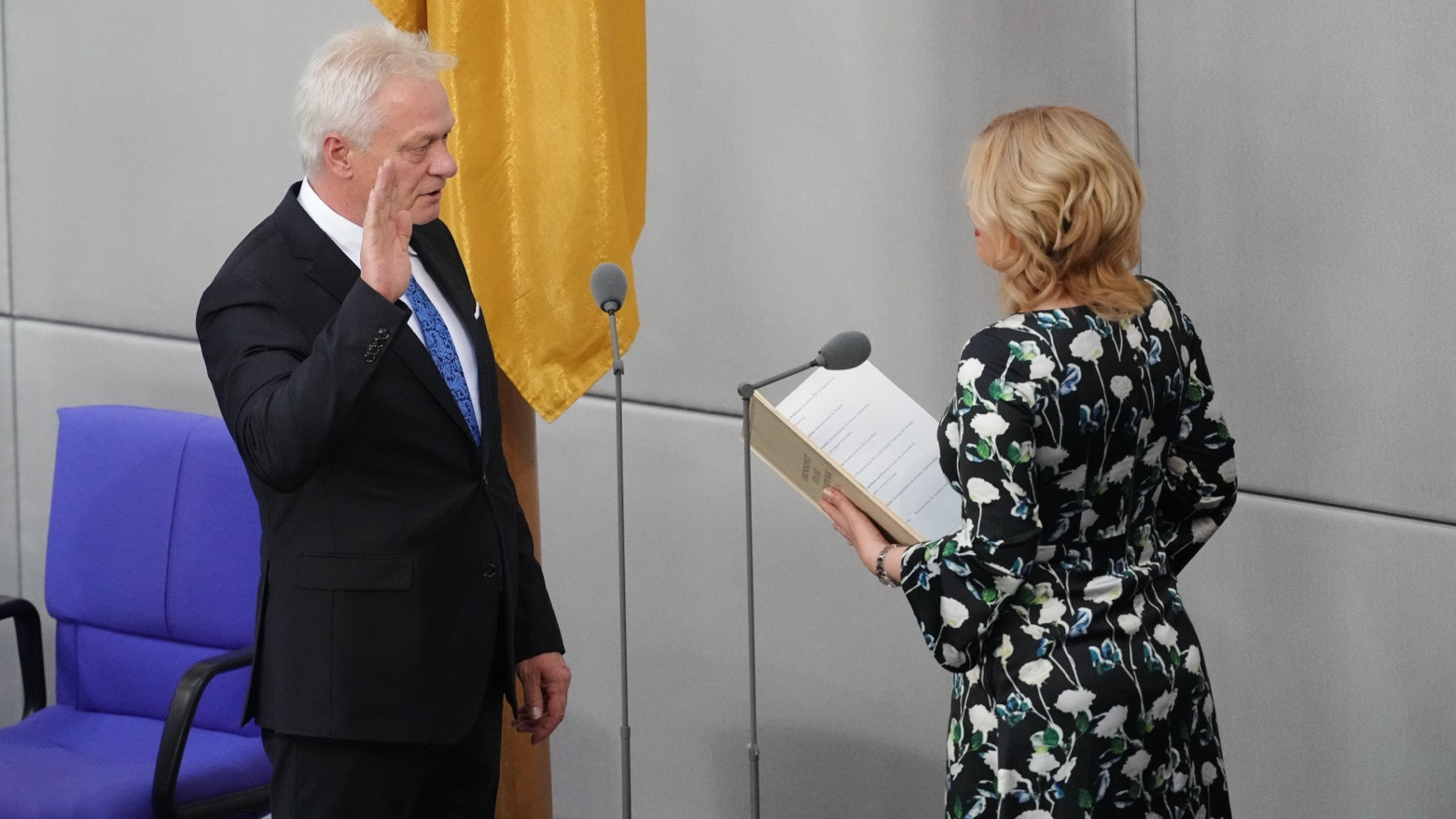
His first government statement (Regierungserklärung) as minister, setting out the coalition’s agricultural priorities.
II · 01 Politics — Bundestag
Four direct mandates, three committees, two spokesperson roles and a committee chair: Alois Rainer’s parliamentary record before he joined the government.
Direct mandates
First-vote (Erststimme) results in the Straubing constituency. The constituency was numbered 231 until 2021 and 230 from 2025.
Source: Federal Returning Officer (Bundeswahlleiterin), official results 2013, 2017, 2021, 2025. Bars show share of valid first votes on a 0–100 % scale.
Full member. The Haushaltsausschuss decides on the federal budget line by line and is often called the most powerful committee in the Bundestag. He was also a full member of the Committee on Food and Agriculture and of the Audit Committee (Rechnungsprüfungsausschuss), which reviews how federal money was actually spent, and a deputy member of the Transport Committee.
Full member of the Committee on Transport and Digital Infrastructure and deputy member of the Committee on Food and Agriculture. CSU budget and finance spokesperson (2018 – October 2019), then CDU/CSU transport spokesperson (2019 – December 2021).
Elected chair at the committee’s constituent meeting on 15 December 2021. The committee had 45 members and led on tax, customs and financial-market legislation. See Finance & Budget.
Re-elected for constituency 230 in February 2025 with 46.3 % of first votes. Since 6 May 2025 he has answered to the Bundestag as Federal Minister, in plenary debates, government question time and committee sessions.
Sources: Bundestag biographies, 18th and 19th terms; Finance Committee constitution, 2021.
In the chamber as minister
His first government statement (Regierungserklärung) as minister, setting out the coalition’s agricultural priorities.
First reading of the bill bringing the wolf under federal hunting law. The bill passed on 5 March 2026.
Opening statement on rebuilding trust, strengthening support and securing food, followed by questions from MPs.
First reading, introducing video surveillance as standard in large slaughterhouses.